Global Toy Giants Charge into the Gaming Market
 By Levich Toys Experts Team2026-09-244 minutes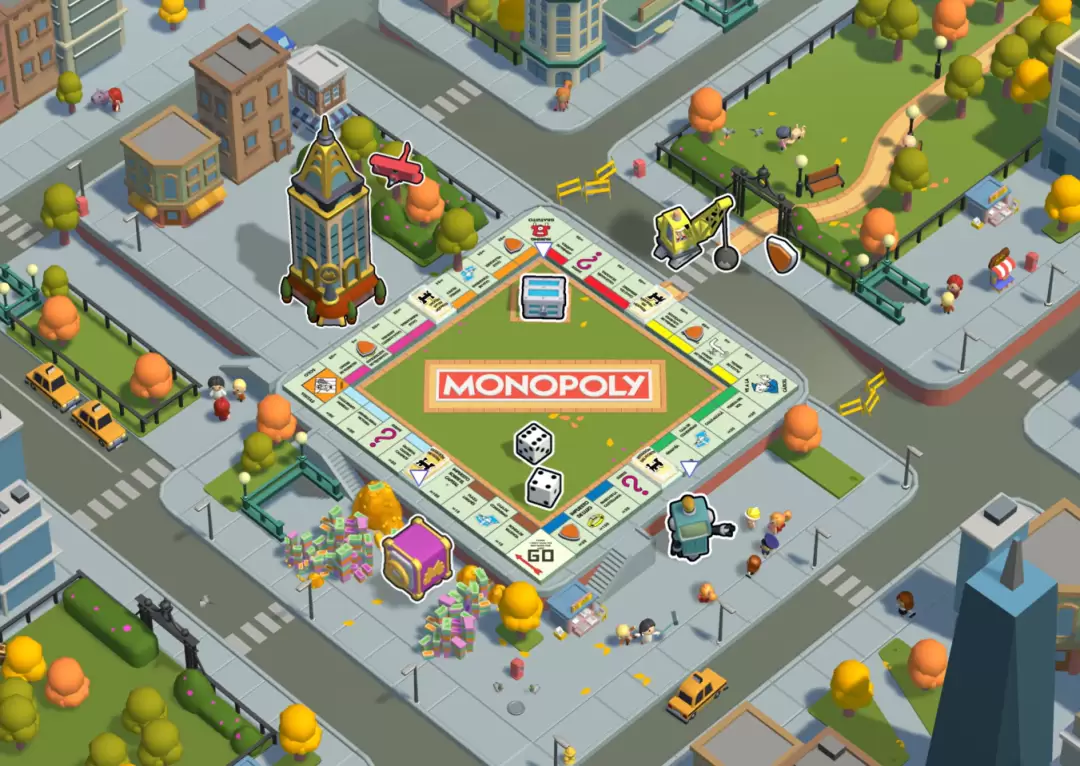
Since the phenomenal mobile game *Monopoly Go!* took the world by storm, no one has been watching more closely than Hasbro's longtime rival — fellow toy giant Mattel.
Since the phenomenal mobile game Monopoly Go! took the world by storm, no one has been watching more closely than Hasbro's longtime rival — fellow toy giant Mattel.
Built on Hasbro's classic Monopoly IP and developed by Scopely, Monopoly GO! launched in 2023. Combining dice-rolling mechanics, social virality, and high-frequency live-ops events, the game surpassed US$1 billion in player spending within just seven months and climbed to the top of the charts in Western markets beginning in the second half of 2023. It has become the benchmark for turning a legacy board-game IP into a blockbuster mobile title. As of 2026, cumulative in-app purchase revenue has exceeded US$6 billion, according to Sensor Tower. In Q2 2026 alone, the game generated approximately US$44 million in licensing revenue for Hasbro, bringing the first-half total to around US$86 million. For a toy company, this is far more than a side project — it proves that a classic IP, paired with live operations and social-driven growth, can build a cash flow more stable than selling physical products.
Mattel, meanwhile, has deep roots in the gaming industry. The company developed its own games back in the 1980s and 1990s. After 2000, it largely pursued an IP licensing model, with franchises such as Barbie, Hot Wheels, and UNO adapted by third-party developers including THQ, Ubisoft, Milestone, and Outright Games. The Mattel163 joint venture with NetEase, established in 2018, marked a step toward in-house development. Then, in February 2026, Mattel paid US$159 million to acquire NetEase's remaining 50% stake in Mattel163, taking full ownership of the mobile gaming venture.
On August 13, Mattel officially announced the launch of Mattel Game Studios. With nearly 300 employees across Los Angeles and Hangzhou, the studio operates under Mattel Digital Studios and is tasked with turning IPs including UNO, Hot Wheels, and Masters of the Universe into mobile games as well as experiences on Roblox and Fortnite.
Early progress looks encouraging. Mattel163's titles — including UNO! Mobile, Phase 10, and Skip-Bo — have surpassed 550 million global downloads, with around 20 million monthly active users. The company released its first fully self-developed mobile game, Skeletor: Until Next Time! (based on Masters of the Universe), in June. UNO Wild is currently in soft launch, and a new Hot Wheels mobile game is in development. Mattel is also working to bring its most iconic franchise, Barbie, to a game format that truly fits the brand.
Looking at Mattel's latest Q2 FY2026 earnings: net sales reached US$1.125 billion, up 10% year on year. The company posted a net loss of approximately US$18 million, with adjusted operating profit of US$39 million, as gross margins came under pressure from tariffs, inflation, licensing costs, and foreign exchange. The traditional toy business is not unprofitable — but growth is expensive, margins are thin, and inventory and macroeconomic risks run high. Mattel163, by contrast, contributed nearly US$49 million in revenue and around US$14 million in adjusted operating profit in the quarter, while lifting the group's gross margin by 120 basis points.
Mattel's strategy is clear. The physical toy business will continue to be driven by IP and film. In digital gaming, the company is upgrading its model from licensing to full in-house development, publishing, and live operations. Through IPs such as UNO, Hot Wheels, Barbie, Power Rangers, Masters of the Universe, and Polly Pocket, Mattel aims to create casual and mid-core mobile games and UGC experiences that capture younger online audiences — transforming one-time product sales into a long-term business built on recurring in-app purchases, events, skins, and collaborations.
Replicating the success of Monopoly GO! will not be easy. At its peak, Scopely spent millions of dollars per day on user acquisition, and IP crossovers alone are not enough to sustain a game. The truly difficult parts to master are the rhythm of live operations and long-term user retention. UNO has an established foundation, while Hot Wheels naturally targets male and collector audiences. The real question is whether Barbie and Polly Pocket can win over young female audiences on mobile.