
Squishy Toys Are Flying Off Shelves in the West — So Why Are They Suddenly Being Pulled Everywhere?
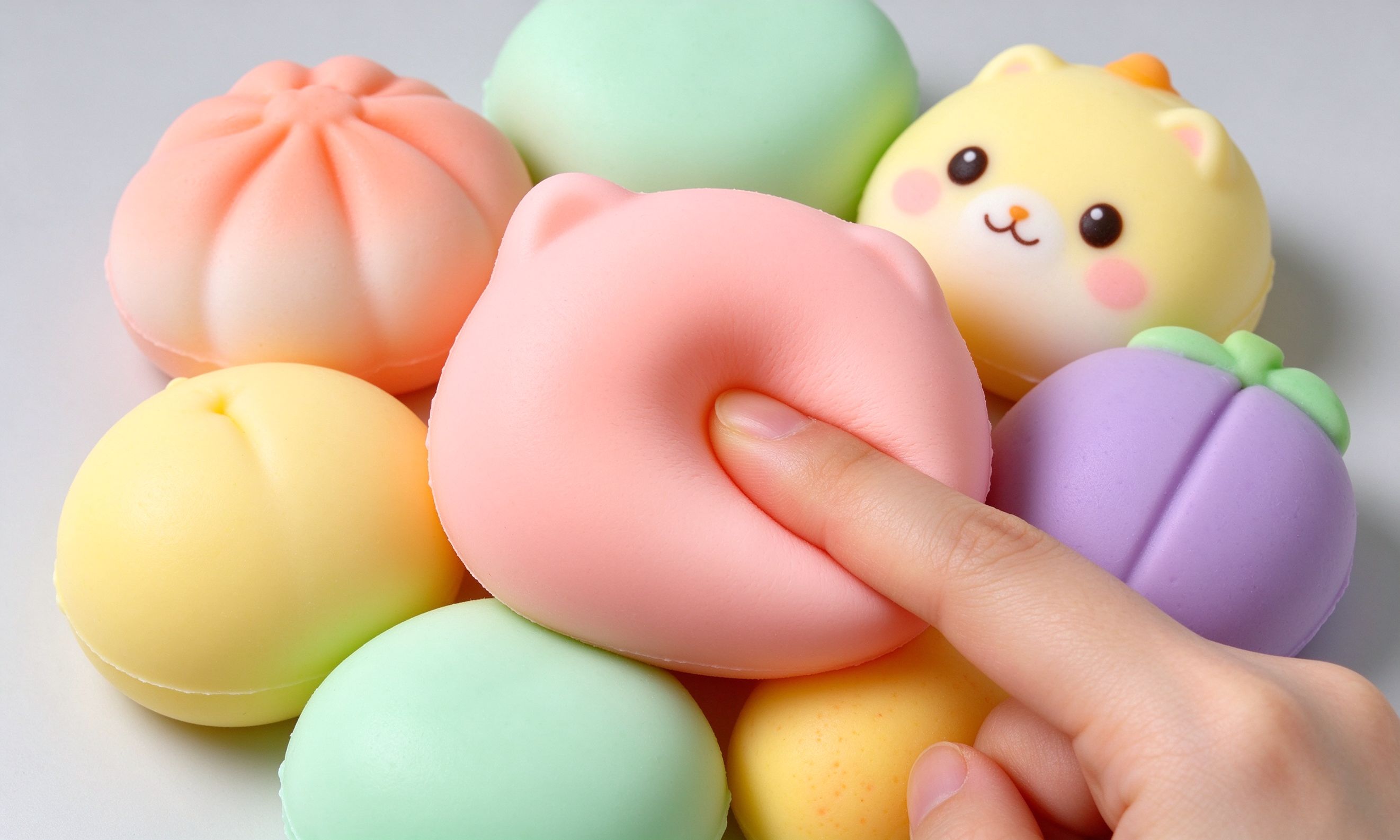
Squishy toys are a runaway hit in the West—U.S. sales hit nearly US$300 million in H1, up fourfold—yet recalls and crackdowns are mounting. Here's what the CPSC, UK OPSS, and EU Safety Gate are enforcing, and the CPC, ASTM F963-23, EN 71, and CPSC eFiling requirements exporters must meet to survive.
"Squishy toys" (also called squeeze toys) is the industry's catch-all term for squeezable stress-relief products made from soft materials such as slow-rebound PU foam, TPR, and silicone. With their cute, pillowy looks and satisfying squeeze-and-rebound feel, they have stayed a runaway hit across Europe and North America. In the first six months of this year, U.S. sales of squishy toys approached US$300 million, up roughly fourfold year on year. But along with the boom has come a barrage of recalls, warnings, and platform crackdowns. In just three months, from June to September 2026, the UK's OPSS, the EU Safety Gate, and the U.S. CPSC issued recall orders and consumer alerts one after another for the same types of squishy toys. At the same time, marketplaces including Amazon and Temu launched large-scale takedown and cleanup campaigns. A Western sales phenomenon collides with the world's strictest regulators
▌United States — CPSC
On August 5, the U.S. Consumer Product Safety Commission (CPSC) issued a consumer safety warning, noting that counterfeit and shoddy squishy toys may contain excessive levels of harmful chemicals such as lead and phthalates. It also warned children and teenagers not to copy social-media videos showing squishy toys being heated in a microwave, a stunt that can cause severe burns. Working together, the CPSC and U.S. Customs have intercepted 55 non-compliant shipments at ports, totaling more than 350,000 problematic products. In May, the CPSC announced the recall of a batch of Orb Funkee squeeze toys that had been selling strongly at Walmart, totaling about 121,000 units. The reason: the sand-like filling inside the toys was suspected of containing asbestos, which can pose serious—and even life-threatening—health risks if inhaled. In September, the CPSC issued two back-to-back squishy toy recalls: GIHNJSI Squeezy Dumplings (about 8,000 units) — translucent round soft balls containing glitter particles and water beads. If children swallow the beads, they expand inside the body, posing risks of choking, intestinal blockage, and even death. Rainbow Mystery Squishy Bun Toys (about 7,200 units) — likewise recalled for containing non-compliant, expandable water beads.
▌United Kingdom and the European Union
On June 25, the UK's OPSS led the way by recalling a steamer-basket-shaped squishy toy; testing found the benzene level in its outer layer was four times the permitted standard, qualifying it as a "serious chemical risk." In August, OPSS issued two further notifications, extending the concern from chemicals to microbial contamination: liquid-filled squishy toys exceeded limits for aerobic microorganisms, yeasts, and molds, and the products were refused entry and destroyed. In the EU Safety Gate's July notifications, the risk points tied to squishy-type products included: Plastic eyes, feet, suction cups, and beads that detach easily, causing choking; Sand-filled squishy toys whose inner sand tested positive for asbestos, which can cause cancer with long-term exposure.
What manufacturers need to know: technical standards and testing requirements
▌EU market: full EN 71 suite + REACH + benzene limits
For squishy toys exported to the EU, the Toy Safety Directive (2009/48/EC) under CE marking is the overarching legislation, with the EN 71 series as the core testing standards: EN 71-1 — mechanical and physical properties EN 71-2 — flammability EN 71-3 — migration of heavy metals EN 71-15:2025 — formamide There are also benzene and plasticizer limits: the free benzene content in toys and toy parts must not exceed 5 mg/kg (0.0005%), and each of the six phthalates must be ≤0.1%. Note that the EU published the new EN 71-1:2026 in January this year, and test reports must follow the new version. The EU's new Toy Safety Regulation (EU) 2025/2509, published in December 2025, will replace the current 2009/48/EC Directive. It is not yet applicable, with a transition period running to around August 2030; even so, companies are advised to prepare early for developments such as the Digital Product Passport (DPP) and restrictions on PFAS and bisphenols.
▌U.S. market: CPC + ASTM F963-23 + CPSIA
Squishy toys intended for children aged 12 and under fall under mandatory Children's Product Certificate (CPC) certification and must be tested by a CPSC-accepted third-party laboratory. Core standards include ASTM F963-23, CPSIA, and 16 CFR 1307. In addition, CPSC eFiling became mandatory on July 8, 2026: children's squishy toys exported to the United States must also complete CPSC eFiling electronic registration, covering all shipment values and batch sizes, with no exemptions for small batches, samples, or trial packs.
Demand for squishy toys in Europe and America remains robust, but global regulators' tolerance for this product category is shrinking fast. In this elimination game, only those who get their compliance chain sorted out first will be left standing.